

A companion essay to The Twelve Who Were Not: Composite Apostles and the Making of Early Christianity
When the Roman legions under Titus breached the walls of Jerusalem in the summer of 70 CE and the Temple burned, the surviving accounts describe the fire in almost incomprehensible terms. Josephus, present as a Roman-affiliated observer, writes in the Jewish War that the flames outran every effort to contain them, that the gold on the Temple’s interior melted and ran between the stones, that the noise and the heat exceeded anything in his own experience of destruction. The Temple Mount, the center of Jewish religious and political life for centuries, was reduced to rubble the Romans later plowed under. The surrounding city was destroyed with the thoroughness of an operation meant to eliminate a problem permanently rather than subdue it for a season.
For many readers across the centuries since, the destruction of the Temple has been remembered and understood mainly as a theological turning point: the end of the sacrificial system, the scattering of the Jewish people into a long diaspora, the rabbinic move from Temple-centered practice to Torah-centered community. Those changes are real and have earned the attention they’ve received. For the argument of this book, though, the destruction of Jerusalem in 70 CE did something more particular and, I think, more immediately consequential for early Christian institutional history: it destroyed the physical and social base of the early movement’s dynastic-collegial leadership model and opened an authority vacuum that the apostolic list was built to fill.
Understanding why takes some sense of what was actually in Jerusalem before the legions arrived, and what its loss meant for the communities that survived it.
What Was Lost Before the Fire
James the Just, the Lord’s brother and, on the reading developed in the companion essay on the Jerusalem pillars, the first-ranked figure among them, was already dead by the time the fire came. The high priest Ananus had him executed in 62 CE, eight years before the city fell, in the gap between Roman governors when no one with the authority to stop the proceeding was in a position to intervene. Josephus records the execution and its aftermath: fair-minded citizens of Jerusalem appealed to the incoming governor Albinus, Ananus lost his position, and the community James had led was left without its senior figure.
James’s execution was the first serious loss the dynastic-collegial model absorbed, and its effects were immediate. Leadership of the Jerusalem community passed to Simeon, a relative of James, on the same dynastic principle that had put James at the head of it: authority ran through the family of Jesus because that family was, on this account, the institutional center of the movement’s founding authority. But James’s execution had already weakened the dynastic center’s ability to project authority out to the diaspora communities, and the years between 62 and 70, as Judea moved toward open war with Rome, made the Herodian political connections that had helped the Jerusalem leadership maintain its wider reach steadily more dangerous to acknowledge.
The Herodian dimension of the early movement’s leadership network is the part of the pre-70 situation the tradition later worked hardest to cover, and understanding how exposed and dangerous it became after the war matters for understanding why the apostolic list took the shape it did. Across this trilogy, I have argued for a Herodian-adjacent network running through parts of the early movement’s leadership: Paul’s greeting to his kinsman Herodion in Romans 16:11, the kinship language applied to Andronicus and Junia in the same chapter, the Beloved Disciple’s access to the high priest’s courtyard in John 18, and the Boanerges epithet’s possible political charge. These pieces carry different weights, and that difference should stay visible rather than get flattened for effect. The Herodion and Junia material rests on a fairly direct textual observation about Pauline kinship language; the Beloved Disciple and Boanerges arguments are more reconstructive readings of anomalies the text does not explain on its own, and I hold them more loosely than the Pauline material. Together, if the pattern holds even partially, this network connected the early movement to the factional world of first-century Judean politics in ways that were assets before the war, giving access to social worlds Galilean fishermen could not otherwise have reached, and became liabilities after it, when association with the Herodian political world marked a community as tied to a factional landscape the war had just destroyed.
When Jerusalem fell, the infrastructure that had made the dynastic-collegial model workable for two decades was destroyed along with it. The city that had been the movement’s geographic center was rubble. The family of Jesus was scattered and politically exposed, their descendants the ones Domitian would reportedly interrogate decades later as possible dynastic threats before dismissing them as poor farmers with calloused hands. The Herodian political network that had given the movement’s leadership its wider reach was now a liability rather than an asset. The physical place from which James’s representatives had once traveled to Antioch with the authority to change Peter’s behavior at the table no longer existed.
The communities that survived needed a replacement, and they needed it quickly, because the vacuum the Jerusalem center’s destruction left behind threatened the movement’s coherence at the same moment its Gentile expansion was making geographic coherence matter more than it ever had before.
What the Surviving Communities Needed
The communities that carried the movement through the catastrophe of 70 CE were mostly Gentile, spread across the eastern Mediterranean, and connected to the Jerusalem center mainly through Paul’s missionary work rather than through direct contact with the dynastic family or the wider apostolic network. These communities had not known James personally and had not been present at the founding events. The authority of the Jerusalem pillars over them had always traveled at a remove, carried by representatives, letters, and the social weight of the dynastic claim, rather than by direct contact.
Once the Jerusalem center was gone, that mediated authority stopped functioning. Representatives could not travel from a city that no longer existed. Letters could not carry the weight of a center reduced to rubble. The social standing that came with kinship to Jesus depended on the family’s presence somewhere the wider movement recognized as authoritative, and after 70 the family survived only as dispersed individuals rather than as an institutional center.
What the surviving communities needed, on this reading, was a form of founding authority that could work without a geographic center, that could pass on without biological succession, that any community anywhere could claim regardless of its distance from Palestine, and that could hold up against challenge without requiring anyone to travel to Jerusalem and check it against the living memory of the dynastic community. The apostolic list, I am arguing, answered that set of needs, and its major features line up with those needs closely enough that the fit is worth taking as evidence for a deliberate construction, though fit alone is suggestive rather than conclusive.
The commission-based model, grounded in Jesus’s direct appointment of twelve named disciples, solves the geographic problem by making the source of founding authority mobile rather than tied to one place. The authority comes from what Jesus did and said, not from where the family of Jesus lives or where the movement’s center sits. Any community that accepts the gospel account of the apostolic commissioning inherits the authority the commissioning granted, wherever it happens to be relative to Palestine or to any surviving member of the Lord’s family.
The transmissibility of apostolic succession through the laying on of hands solves the biological-succession problem by replacing the kinship logic of the dynastic model with an authorization logic. Dynastic succession needed a living body, a family member able to inherit the previous generation’s authority. Apostolic succession needed only an authorization, someone who had received the laying on of hands from someone who could trace a line back to the apostolic commissioning, and that chain could extend indefinitely, to any community, in any generation, without depending on any one biological line surviving.
The Galilean-fisherman imagery of the apostolic list solves the political problem by putting distance between the movement’s account of its own origins and the Herodian political world the war’s aftermath had made dangerous to acknowledge. The twelve figures in the apostolic list are presented, in the tradition’s dominant account, as working men from the margins of Galilean society, fishermen, a tax collector, figures about as far from the aristocratic Herodian network as the actual leadership had been embedded in. I don’t think the Galilean-fisherman type is a neutral biographical description of who happened to hold founding authority. I think it functions, on this reading, as a social portrait built to present the movement’s origins in politically neutral terms, making the founding community look as unlike the Herodian-adjacent Jerusalem aristocracy as possible at the moment that resemblance had become dangerous.
The Matthean Speech and What It Argues
Matthew 16:17-19 contains one of the boldest institutional arguments in the gospel tradition: Jesus tells Peter he is the rock the church will be built on, gives him the keys of the kingdom, and grants him binding and loosing authority that operates in both the earthly and heavenly registers. The passage grounds later claims to Petrine primacy, and it appears in Matthew alone, absent from Mark, Luke, and John.
I read the speech as a post-70 document, and I think that reading changes what it means.
Matthew’s gospel was written in the 80s CE, in the decade after Jerusalem’s destruction, by a community working out what the catastrophe meant for the movement’s institutional structure. On this reading, the commissioning speech at Caesarea Philippi is not a preserved memory of something Jesus said on an afternoon in northern Galilee fifty years earlier. It is a theological argument about the ground of Christian authority, aimed at communities navigating the vacuum the Jerusalem center’s destruction had created, communities that needed a form of founding authority able to survive the loss of every physical support the movement had previously depended on.
The claims the speech makes line up, on this reading, with the problems the post-70 situation created. The gates of Hades not prevailing against the church built on Peter’s authority reads, on this account, less as a statement about the afterlife than as an institutional claim about permanence, an assertion that this authority will outlast any catastrophe, including the one that had just destroyed the movement’s previous center. The keys of the kingdom, and binding and loosing in heaven and earth, are claims about how far and how transmissibly the authority extends, establishing that what Peter’s office grants can pass to successors whose authorization comes from connection to the Petrine office rather than from blood relation to the founder’s family.
On this reading, the speech answers three problems the destruction of Jerusalem had created at once. It grounds authority in commission rather than kinship, making it transmissible through institutional succession rather than birth. It makes the granting of authority a direct act of Jesus, removing the need for any geographic or institutional center to carry it forward. And it sets the commission back into the ministry itself, before the crucifixion, before the resurrection, before the destruction of Jerusalem, so that the authority communities needed after 70 appears, in the text’s own telling, to have been granted before any of the catastrophes that destroyed the earlier arrangements.
I think this retroactive placement is a consequential feature of the speech, if the reading is right: by putting the institutional commission in Jesus’s own mouth at Caesarea Philippi, the Matthean community did something religious communities do fairly often under institutional pressure, reaching back to the founding moment and finding there, already granted, the authority the present crisis required. This is an argument about what the text is doing and why, not a claim I can verify against any account of the actual composition process; the community’s motives are not something the text states, only something this reading proposes in order to make sense of the pattern.
The Twelve as Post-70 Architecture
The apostolic list, read as a post-70 construction, strikes me as an unusually effective response to an institutional crisis. What it accomplished at once was considerable: a portable, transmissible, apolitical founding authority to replace the site-specific, biologically transmitted, politically networked dynastic-collegial model of the Jerusalem pillars, built by reaching back to the founding moment of the ministry and finding there, already present, a symbolic body of twelve that any community anywhere could claim as its own founding council.
The symbolic number was already available in the tradition’s own theological vocabulary: the eschatological saying about twelve thrones judging twelve tribes, preserved in the Q material, supplied a framework in which a symbolic body of twelve could stand for reconstituted Israel’s governing council. On this reading, the eschatological became institutional: the image of twelve thrones became a list of twelve names, and the list of twelve names became the founding authority structure the destruction of Jerusalem had made urgently necessary.
I don’t think the communities that assembled the apostolic list were fabricating something from nothing. I think they were building an institution, using materials already present in the tradition’s theological vocabulary, in response to a real institutional crisis. That building required choices: which names to include, how to frame the commissioning scenes, which figures to place at the center and which at the margins, and, more significantly, what to do with figures whose actual roles in the early movement did not fit the symbolic body the list was meant to project. The three pillars of Galatians, the outstanding apostles of Romans 16, the desposyni whose grandsons Domitian reportedly interrogated as dynastic threats, the Herodian-adjacent figures whose political network had given the early movement its social reach: on this reading, each was either folded into the list in a form that drained its dynastic or political significance, or left out of it, their places taken by Galilean fishermen whose social origins made them look like the more apolitical carriers of an authority claim that needed exactly that appearance.
What burned in 70 CE was a Temple, a city, and a governing model. The Temple’s significance has been discussed for two thousand years. The governing model’s destruction and what replaced it have been discussed for nearly as long, though usually as organic development rather than institutional construction. I am arguing here that the replacement was built, deliberately and with real skill, in response to a real crisis, and that the building succeeded to a degree that left the ground it covered, the three pillars, the outstanding apostles, the desposyni, the Herodian political network, mostly covered for nineteen centuries, visible only in what the construction could not remove: the Pauline letters written before the construction was finished, the Hegesippan fragments that survived through Eusebius despite Eusebius’s own institutional interests, the closing greetings of Romans where the Herodian-adjacent network is still legible in the kinship language Paul attaches to names the apostolic list never mentions.
The fire of 70 CE destroyed the physical base of the dynastic-collegial model. What replaced it, on this reading, was more durable, more portable, and more institutionally flexible than anything the dynastic center could have offered, and it has governed Christian institutional imagination for two thousand years, which says something about how well the construction was made and how thoroughly it covered the ground beneath it.
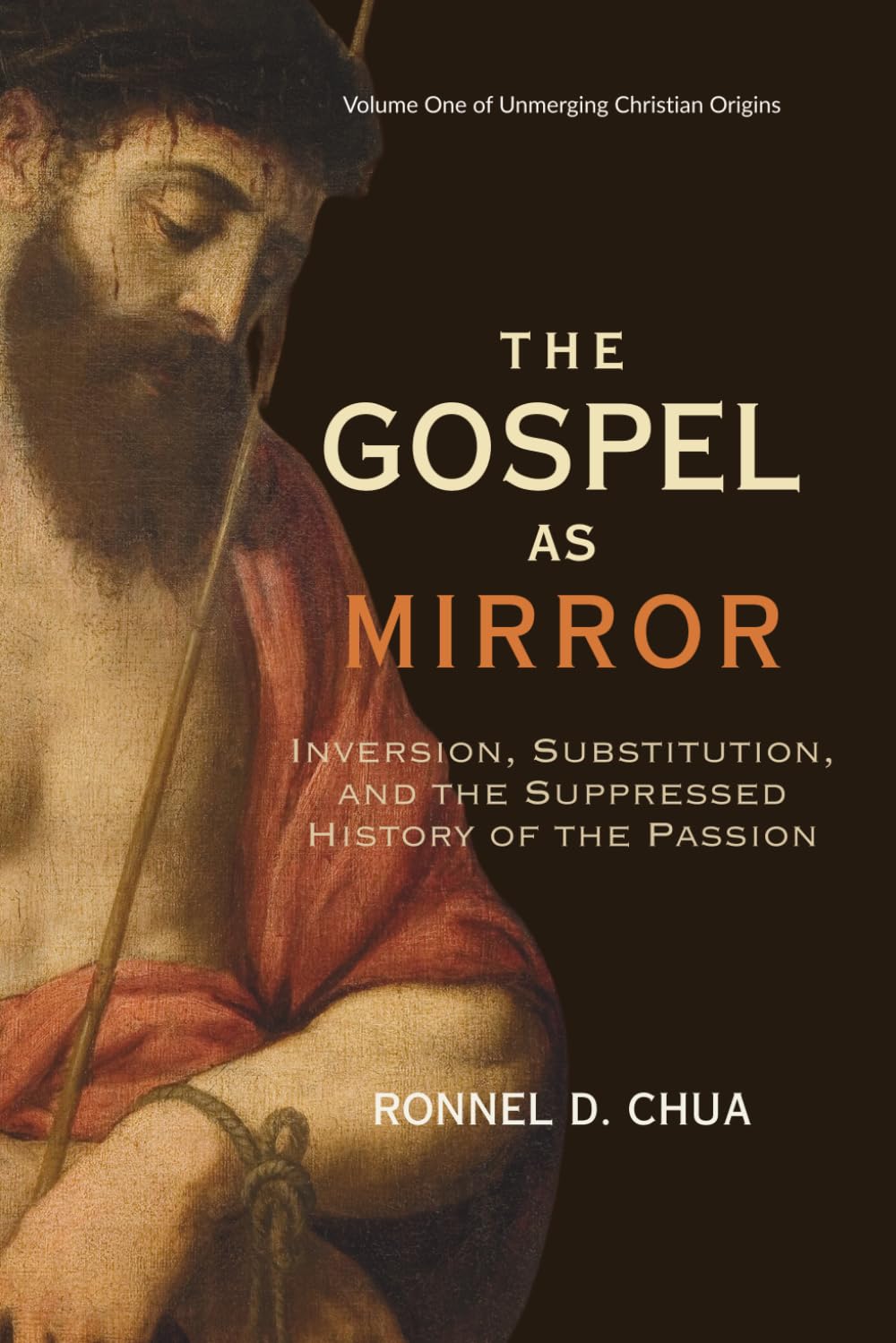
This essay supplements Chapter Two and Chapter Eight of The Twelve Who Were Not: Composite Apostles and the Making of Early Christianity by Ronnel D. Chua, available on Amazon. The trilogy Unmerging Christian Origins also includes The Gospel as Mirror (Volume One) and The Two Pauls (Volume Two).
Leave a Reply