
A companion essay to The Twelve Who Were Not: Composite Apostles and the Making of Early Christianity
Somewhere between the first century and the medieval period, a scribe changed one vowel ending, and the history of apostolic authority changed with it.
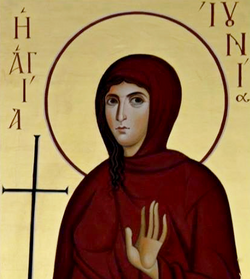
The edit was small in the way the more consequential ones tend to be: a single letter, the ending of a personal name, the difference between the feminine Junia and the masculine Junias. Whoever made the change, a scribe working alone or a commentator whose reading later scribes adopted, was solving a problem that the plain text of Romans 16:7 had created and that the tradition found less tolerable as the centuries passed. Paul had written, in a list of greetings to the Roman community, that Andronicus and Junia were outstanding among the apostles and had been in Christ before him. Junia was the difficulty. She was a woman. She was outstanding among the apostles. And the apostolic tradition consolidating through the second, third, and fourth centuries had no place for a woman in that position, which left two options: either the tradition was wrong about who could be an apostle, or the text was wrong about who Junia was. The tradition chose the second option, and it got there by changing a vowel.
In 1977 Bernadette Brooten published an article in the Journal of Biblical Literature examining the onomastic record, the evidence of what names actual people in the Greco-Roman world actually carried, and what she found should have settled the question at once. Junia was a common woman’s name across the ancient Mediterranean, attested widely and in varied contexts. Junias, the masculine form the medieval manuscripts had substituted, appears nowhere: not in an inscription, not in a literary text, not in a papyrus, not on a tomb marker, not in any document from the period. The tradition had manufactured a name rather than corrected a reading, and the invention held for more than a thousand years because nobody checked the onomastic record until Brooten did.
The scholarly consensus has since returned to Junia. Recent critical editions of the New Testament restore the female name, and recent commentaries acknowledge the fabrication; the question of her gender is, within New Testament scholarship, effectively settled. What has not received the attention it deserves is what the re-voweling reveals about how the tradition handled evidence it found inconvenient.
The Mechanics of the Change
Understanding what happened to Junia’s name requires understanding how the ancient writing systems made that kind of change possible in the first place.
Biblical Hebrew recorded consonants only; readers and their communities supplied the vowels. The consonants held steady across centuries of copying, while the vowels, supplied fresh by each reading tradition, decided which of a root’s several meanings came forward. That is the system that let the name Issachar carry both there is reward and man of hire at once, and that let the name Is-kar in the Passion narrative carry, in its consonants, the meaning man of the covenantal transfer, while the tradition’s voweling pointed readers toward a village in Judea instead.
Greek writes its vowels, so changing a Greek name is a more visible act than changing a Hebrew one. Nobody can shift the breath under a word and produce a different name; an actual letter has to be altered, which makes it an editorial decision rather than a mere ambiguity of the writing system. Whoever wrote Junias in place of Junia made a deliberate editorial choice, grounded in a conviction about who could and could not be outstanding among the apostles.
What the Junia case shares with the Is-kar case is not the mechanism, since Hebrew and Greek work differently, but the pattern behind it. In both cases the tradition kept the consonants it could not remove without destroying the name, and altered whichever element carried the meaning it needed gone. Is-kar’s consonants, SKR, held steady across every manuscript for twenty centuries and encoded the covenantal sense of handing over that the Sefire inscriptions preserve in hskr thskr hm; the tradition’s voweling pointed instead toward Ish-Kerioth, the man from an obscure village, and that redirection held until an Aramaic philologist gave scholars the means to read the consonants correctly. Junia’s consonants, preserved wherever the name survived at all, encoded the female gender of an outstanding apostle; the tradition changed the final vowel, turning a feminine ending into a masculine one, and the fabrication held for over a thousand years.
The target in both cases was the same kind of thing: evidence whose actual meaning conflicted with the institutional picture the apostolic list was built to project. Is-kar’s covenantal function conflicted with the betrayal story the tradition needed. Junia’s standing as a female apostle conflicted with the all-male twelve-throne council the tradition needed. Both operations worked at the level of the text itself, below narrative revision and short of outright deletion, in the letters and syllables where meaning actually lives.
What Romans 16:7 Actually Says
Before drawing out what Junia’s restoration means, the verse itself needs a slower reading, because its four pieces of information are not equally familiar, and the least familiar piece carries the weight.
Paul writes: greet Andronicus and Junia, my kinsmen and my fellow prisoners, who are outstanding among the apostles, and who were in Christ before me.
Kinsmen, sungenis in Greek, denotes a real, acknowledged family tie rather than a loose genealogical connection, and it is the same word Paul uses for Herodion two verses later, in verse eleven. The cluster of people Paul calls his kinsmen in the closing chapter of Romans, Herodion among them with a name that carries the Herodian dynastic title in its own syllables, places Andronicus and Junia inside a social world with political connections the tradition’s later imagery had every reason to erase.
Fellow prisoners tells us that Andronicus and Junia had shared a jail cell with Paul at some point in the mission, which puts them among people who took on personal risk for the movement rather than among peripheral supporters. Being imprisoned for the work is not a minor credential.
Outstanding among the apostles is the phrase the re-voweling targeted. The Greek word, episemos, means marked out, distinguished, holding notable standing inside a group. The word only makes sense against an apostolic body with real size to it, where standing out means something; a fixed roster of twelve people with settled membership does not generate that concept the way Paul uses it here. Andronicus and Junia occupy a tier of recognized standing within a wider apostolic body, and Paul is naming that standing to the Roman community as a form of endorsement.
And they were in Christ before Paul. This is the detail that fixes their place in the timeline with the sharpest precision. Before the Damascus road, before Paul’s apostolic mission had begun, before any letter he would write, Andronicus and Junia were already in the movement, in the founding layer, in the period when the three-pillar arrangement described in Galatians still governed Jerusalem and the formal apostolic list had not yet taken the shape the gospels would later give it.
What the Founding Layer Looked Like
A woman outstanding among the apostles in the pre-Pauline founding period is not a footnote about one unusual career. It is a window onto what the actual apostolic community looked like before the tradition produced the account that the apostolic list encodes, and the view through that window shows a community more varied, more fluid in how it recognized authority, and more open to women in practice than the closed roster of twelve Galilean fishermen suggests.
The exclusively male Twelve is a narrowing of that reality rather than a record of it. The apostolic list narrows a broader founding picture in which women could be outstanding within the apostolic body, in which that body had room for recognized tiers of standing, in which political networks tied the leadership to the Herodian dynastic world, and in which a figure’s authority came from some combination of historical proximity to the founding events and recognized community standing, not from a single commissioning scene the gospels would later project back onto the ministry.
The narrowing served an institutional need. As the movement spread into the Gentile world, as Jerusalem’s center weakened after James’s execution in 62 CE and was destroyed outright by the war of 66 to 70, as the dynastic-collegial model of the three pillars grew harder to sustain across communities scattered across the empire, the apostolic list offered something portable and institutionally stable in its place, and its all-male composition reflected the gender norms of the episcopal communities producing the list rather than the gender practice of the founding period it claimed to describe.
Junia is the sharpest piece of evidence for that narrowing, because she survives in a letter Paul wrote before the narrowing was finished, in a greeting whose wording the tradition could not touch without damaging the letter itself, and whose management therefore fell to the only tool left once deletion was off the table: the ending of her name, changed by a scribe, and left changed for eleven centuries.
The Parallel Between the Two Names
The Junia case and the Is-kar case make each other more visible than either does alone, because together they show the tradition’s re-voweling as a method rather than an isolated decision.
With Is-kar, the tradition kept the consonants SKR, which encoded the covenantal sense of handing over, and supplied vowels that pointed readers toward a village instead, keeping the consonants from being read as what they actually said. The redirection worked so well that the encoding stayed unread in the consonants for twenty centuries, preserved because the consonants could not be removed, and legible again only once the Sefire inscriptions gave philologists the Aramaic pathway to read them.
Junia’s case runs the same course: the tradition kept the consonants of her name, which encoded the female gender of an outstanding apostle, and changed the final vowel, turning a feminine ending into a masculine one and producing a man absent from every ancient source. The change held for more than a thousand years, sustained not by any built-in ambiguity in the Greek writing system but by the standing of the commentators who proposed the male reading and the scribes who copied it forward, until Brooten’s 1977 study of ancient names made the invention impossible to defend.
The resemblance between the two operations runs deeper than surface likeness. It points to one method working at different levels of the tradition: when the tradition could not remove evidence it found inconvenient without destroying the form that preserved it, it altered the evidence at its smallest linguistic units, the consonants or the vowel endings where meaning is actually carried. In both cases the consonants could not be touched without destroying the name, so the vowels were what moved: the letters between them for Is-kar, the single ending for Junia. The tradition kept what it had no way to remove and altered what it could still reach, and both operations served one institutional aim: a founding authority pictured as exclusively male, politically neutral, and organized around a twelve-throne council rather than around the varied, gender-inclusive, politically connected reality of the pre-Pauline founding period.
What the Tradition Could Not Reach
The handling of Junia shows the limits of the tradition’s methods as clearly as it shows the methods themselves. The tradition could change the ending of her name in the manuscripts it controlled. It could not remove her from the letter, because the letter was already circulating, already being read in communities scattered across the Mediterranean, and cutting a name from a letter that widely read would have been too visible to pass without challenge.
This is the same suppression residue principle at work in its starkest form: evidence the tradition found inconvenient and could not delete survives because it was carried in a form the tradition could not alter without destroying. Paul’s letters show this pattern in the apostolic tradition better than any other source. They were written before the apostolic list had settled its authority, before the Matthean commissioning scene had built the framework that would make the three-pillar arrangement look like an unfinished stage on the way to something else, before the post-70 reconstruction of the movement’s origins had produced the all-male twelve-throne council as the account of who the founders were. Because they were written before all of that, the letters keep, in their greetings and arguments and contested claims to authority, traces of the founding reality that the apostolic list was built to replace.
Junia carries more of those traces than any other single figure, because she stands where several kinds of suppression meet at once: the exclusion of women from the formal list, the erasure of the Herodian-adjacent network, the shrinking of the wider pre-Pauline apostolic body down to twelve names, and the linguistic alteration the tradition reached for once deletion was off the table. She is outstanding among the apostles, which means the apostolic body of the founding period was large and varied, with outstanding members of its own. She was in Christ before Paul, which places her in the founding layer the apostolic list claims to represent while misrepresenting its composition. She is Paul’s kinswoman in the same sense Herodion is, which places her in the politically connected world the Galilean-fishermen image was built to hide. And she is named in a letter the tradition could only touch at the level of one vowel, which it changed, and which stayed changed for eleven centuries until a scholar checked the ancient record of names and found that the man substituted for her did not exist.
The vowel the tradition changed was as small an edit as a text allows, but what it changed was a much larger thing: the record of who actually led the founding community of Western Christianity, what that leadership looked like, and how much the institutional settlement of the late first century cost the reality it claimed to describe.
Junia was outstanding among the apostles, and the tradition answered that fact by changing a vowel and turning her into a man who appears in no ancient source anywhere. The woman the vowel erased has been preserved all along in the letter Paul wrote, in the consonants the tradition could not remove, waiting for the onomastic evidence that would return to her the ending she always had.
This essay supplements Chapter Three and Chapter Eight of The Twelve Who Were Not: Composite Apostles and the Making of Early Christianity by Ronnel D. Chua, available on Amazon. The trilogy Unmerging Christian Origins also includes The Gospel as Mirror (Volume One) and The Two Pauls (Volume Two).
Leave a Reply